
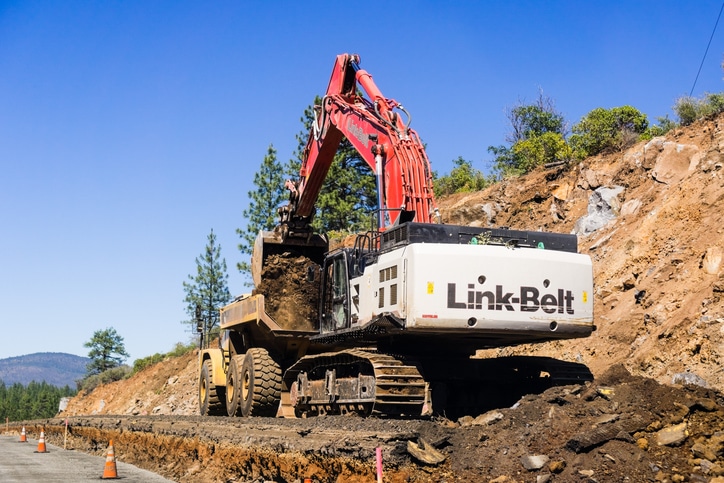
Spring brings both opportunity and challenge to forestry operations. As snowmelt saturates forest floors and temperatures fluctuate, ground conditions can change dramatically from one week to the next. For logging contractors across Oregon, Washington, and Northern Idaho, selecting the right equipment for these transitional conditions can mean the difference between profitable operations and costly downtime.
At Triad Machinery, we work year-round with forestry professionals navigating the unique demands of spring logging. Understanding how to match Tigercat and Link-Belt forestry machines to changing ground conditions is essential for maintaining productivity while protecting the land and your equipment investment.
Understanding Spring Ground Conditions
Spring presents a complex mix of ground conditions that vary by elevation, aspect, and weather patterns. In the Pacific Northwest, several factors converge to create challenging operating environments:
Snowmelt and Saturation
As winter snowpack melts, forest soils absorb tremendous amounts of moisture. Even on slopes where surface drainage is good, subsurface saturation can reduce soil bearing capacity and create unstable working conditions. Higher elevations may still have snow cover while lower sites are completely thawed, requiring operators to adapt their approach as they work through different zones.
Freeze-Thaw Cycles
Spring temperatures in Oregon, Washington, and Northern Idaho often fluctuate above and below freezing, particularly at elevation. These freeze-thaw cycles can temporarily stabilize saturated soils overnight, creating brief windows of good working conditions in early morning before warming temperatures reduce bearing strength. Understanding these daily patterns helps operators maximize productivity.
Variable Soil Types
Pacific Northwest forests grow on diverse soil types, from volcanic pumice and ash in Central Oregon to dense clay soils in the Coast Range and glacial deposits in the Cascades. Each soil type responds differently to spring moisture, with some remaining workable and others becoming impassable with relatively small changes in water content.
Seasonal Road Restrictions
Many forest roads have seasonal weight restrictions or closures during spring breakup to prevent damage. These restrictions affect not just harvesting operations but also equipment transport, maintenance access, and log hauling. Planning your equipment deployment around these limitations is crucial for spring operations.
Machine Selection Principles for Spring
Choosing the right forestry equipment for spring conditions requires balancing several key factors:
Ground Pressure Management
The fundamental principle for spring operations is minimizing ground pressure. Lower ground pressure reduces rutting, protects regeneration, and helps prevent equipment from getting stuck. This is achieved through wider tracks, proper track tensioning, and selecting machines with appropriate weight distribution for the expected conditions.
Mobility and Flotation
Spring operations demand machines that can move efficiently across varied terrain without creating excessive soil disturbance. Features like wide track pads, low ground pressure designs, and proper track geometry become critical for maintaining mobility as conditions soften.
Power-to-Weight Ratio
While lighter machines generally create less ground disturbance, they must still have adequate power to perform their tasks efficiently. The ideal spring machine offers enough power for productive work while maintaining a favorable power-to-weight ratio that promotes good flotation.
Versatility
Spring conditions can change rapidly. Equipment that offers operational flexibility (e.g., adjustable track widths, multiple attachment options, and the ability to work in varied conditions) provides the best return on investment for transitional seasons.
Tigercat Solutions for Spring Operations
Tigercat builds purpose-designed forestry equipment that excels in challenging ground conditions. Several models in their lineup are particularly well-suited to spring work in Oregon and Washington:
Tigercat Skidders
The Tigercat skidder line offers exceptional flotation and traction for challenging spring conditions. Models like the 625H and 635H provide:
- Six-Wheel Design for Superior Traction: Unlike standard four-wheel skidders, these models feature a six-wheel configuration with a rear bogie axle. The four rear tires distribute weight more effectively, improving traction and flotation in soft ground conditions.
- Bogie Axle Performance: The rear bogie axle allows the machine to better follow uneven terrain while maintaining ground contact, giving operators improved mobility and stability in wet or sensitive areas.
- Optional Chains and Band Tracks: For demanding spring conditions, chains can be added to the front axle and band tracks installed on the rear bogie axle. This setup significantly improves traction and flotation while helping maintain productivity in muddy or soft terrain.
- Powerful, Efficient Engines: Tigercat’s powertrains deliver the torque needed to keep moving in difficult ground conditions without excessive fuel consumption.
- Excellent Visibility: Large cab windows provide outstanding visibility, helping operators navigate carefully around sensitive areas and choose the best routes.
For spring operations, we often recommend the 625H for smaller to medium-size timber and the 635H for larger wood. Both machines can be equipped with chains and rear bogie band tracks to maximize traction and flotation while maintaining high productivity.
Tigercat Feller Bunchers
When spring ground conditions allow for mechanical harvesting, Tigercat feller bunchers offer unmatched stability and mobility:
- Leveling Systems: Tigercat’s leveling technology keeps the machine stable on slopes while the saw head remains productive.
- Low Ground Pressure Configurations: Purpose-built tracked models minimize soil disturbance.
- Smooth Hydraulics: Precise control allows operators to work carefully around retained trees and sensitive features.
- Sealed Components: Excellent protection against mud, moisture, and debris extends component life.
The LX830E and LX877 models are particularly effective for spring operations where ground conditions are marginal but workable.
Tigercat Shovel Loggers
For operations that use processor-based systems, Tigercat’s 220X and 234 shovel loggers excel in spring conditions:
- Purpose-Built Boom Geometry: It offers optimized reach and lift capacity for processing efficiency.
- Powerful Hydraulics: Fast cycle times maintain productivity even when working carefully in soft areas.
- Comfortable Cabs: Spring days can be long, and Tigercat’s ergonomic cab design reduces operator fatigue.
Link-Belt Forestry Solutions
Link-Belt’s forestry equipment brings excavator-based versatility and reliability to spring logging operations. Their machines are designed for the demanding conditions found in Pacific Northwest forests:
Link-Belt Forestry Roadbuilders
The Link-Belt forestry lineup includes purpose-built machines that perform exceptionally well in spring conditions:
- X4 Undercarriage: The exclusive X4 undercarriage system provides superior stability and extended component life.
- Comprehensive Guarding: Link-Belt’s forestry packages include extensive guarding to protect against debris and impact.
- Fuel-Efficient Engines: Advanced engine technology delivers power while minimizing fuel consumption.
Models like the 4040BRB and 4640BRB are frequently chosen for spring logging operations in Oregon, Washington, and Northern Idaho.
Link-Belt Forestry Processors
Link-Belt’s processor carriers offer the reach and hydraulic power needed for efficient log processing:
- Precision Control: Smooth, responsive hydraulics enable careful operation around retained timber
- Heavy-Duty Boom: Built to handle processing heads and grapples in demanding applications
- Reliable Components: Durable and less downtime during critical spring operations
- Easy Maintenance: Accessible service points to keep machines running when you need them most
The 3440BPH and 4040BTL processors are proven performers in spring conditions.
Link-Belt Shovel Loggers
Shovel loggers are a cornerstone of many logging operations, and they represent a large share of the Link-Belt forestry machines we sell. Popular models like the 4040BTL and 5040BTL are purpose-built for demanding shovel logging applications and offer:
- Proven Reliability: Field-tested durability in forestry applications
- Excellent Reach: Extended boom configurations for maximum processing efficiency
- Comfortable Operation: Spacious cabs with excellent visibility and ergonomic controls
- Strong Dealer Support: Keeping you operational
Matching Machines to Specific Spring Conditions
Different spring scenarios call for different equipment approaches:
Early Spring (Late March to April)
In early spring, conditions are typically the most challenging. Snowmelt is active, soils are near saturation, and freeze-thaw cycles are most pronounced.
Recommended Approach:
- Prioritize the lightest machines that can still perform required tasks.
- Use wide track configurations whenever possible.
- Focus operations on frozen ground in early morning hours.
- Consider cable logging on slopes where traction is better.
- Use shovel loggers and processors in landing areas where ground can be matted.
Best Equipment Choices:
- Tigercat 625H skidder with wide tracks
- Link-Belt 4040BTL for processing
- Lightweight feller bunchers in firm conditions
Mid-Spring (May)
As soils begin drying and temperatures stabilize, operational windows expand. Ground bearing capacity improves, though wet pockets remain problematic.
Recommended Approach:
- Begin transitioning to standard production configurations.
- Still prioritize low ground pressure where possible.
- Increase operational hours as conditions permit.
- Start moving larger equipment to sites as access improves.
Best Equipment Choices:
- Tigercat 635H skidder (standard or swing boom depending on application and conditions)
- Link-Belt 4040BTL for processing and loading
- Full-size feller bunchers as conditions allow
Late Spring (June)
By late spring, most sites in Oregon, Washington, and Northern Idaho are drying out sufficiently for normal operations. Higher elevations may still have moisture challenges, but lower and mid-elevation sites are generally workable.
Recommended Approach:
- Return to standard production equipment and configurations.
- Focus remaining low ground pressure equipment on higher elevation sites.
- Take advantage of improved conditions to reposition equipment for summer operations.
Best Equipment Choices:
- Full equipment lineup as appropriate for timber type and topography
- Standard track configurations
- Focus on productivity and efficiency
Site-Specific Considerations
Different forest environments across Oregon, Washington, and Northern Idaho require tailored approaches:
Coast Range Operations
The Coast Range receives heavy rainfall and features dense clay soils that drain slowly. Spring operations here require particular attention to ground pressure:
- Favor tracked over wheeled equipment.
- Use mats aggressively on landings and skid trails.
- Consider cable logging systems that concentrate soil impact in defined areas.
Cascade Operations
Cascade forests range from low to high elevation, requiring flexible equipment strategies:
- Follow the snowline carefully as it recedes upslope.
- Match equipment to current elevation and exposure.
- Be prepared for rapid condition changes with weather shifts.
- Use elevation and aspect diversity to maintain continuous operations.
Central Oregon Operations
Volcanic soils in Central Oregon often provide better spring trafficability than other regions:
- Ground conditions may permit normal operations earlier in spring.
- Still monitor soil moisture, especially in areas with higher clay content.
- Take advantage of good conditions while maintaining soil protection awareness.
Washington Eastside Operations
Eastern Washington forests offer varied conditions depending on elevation and soil type:
- Lower elevations dry early and permit normal operations.
- The higher country requires patience and careful timing.
- Pine and fir forests have different soil characteristics requiring adapted approaches.
Equipment Configuration Tips for Spring
Optimizing your Tigercat and Link-Belt machines for spring conditions involves several practical steps:
Track Selection and Maintenance
- Tension: Maintain proper track tension (too loose reduces flotation, too tight increases wear).
- Cleaning: Keep the tracks and undercarriage clean to maintain proper function.
Operating Practices
- Plan Routes: Scout ahead and select the firmest ground for travel.
- Minimize Turns: Turning on soft ground increases soil disturbance.
- Steady Power: Avoid spinning tracks (steady power maintains traction better).
- Use Existing Trails: Reuse trails and roads rather than creating new disturbances.
Maintenance Considerations
Spring’s mud and moisture create additional maintenance demands:
- More Frequent Service: Check and clean filters more often.
- Undercarriage Inspection: Schedule in daily inspection of tracks, rollers, and idlers.
- Seal Condition: Monitor seals carefully (mud accelerates wear).
- Hydraulic Systems: Watch for contamination in hydraulic systems.
Protecting Your Investment
Spring operations can be hard on equipment, but proper practices protect your investment:
Daily Inspection
Start each shift with a thorough machine inspection, paying particular attention to:
- Track condition and tension
- Hydraulic hoses for damage or leaks
- Undercarriage components for wear or damage
- Engine air filtration systems
Cleaning Protocols
Spring mud can accelerate wear and cause premature failures:
- Pressure wash undercarriage components regularly.
- Remove mud buildup from critical areas.
- Keep radiators and coolers clean for proper cooling.
- Clean the cab interior to maintain operator comfort and visibility.
Timely Repairs
Don’t defer maintenance in spring conditions:
- Address small issues before they become major problems.
- Replace worn components promptly.
- Keep adequate parts inventory on hand.
- Work with Triad Machinery’s service team for expert support.
When to Wait
Knowing when not to operate is as important as equipment selection:
- Excessive Rutting: If your machine creates ruts deeper than 6 inches, conditions are too soft.
- Soil Mixing: If organic layer and mineral soil are mixing, you’re causing excessive damage.
- Getting Stuck: Machines requiring frequent winching or assistance are indicators to wait.
- Regulatory Concerns: If operations risk violating forest practice rules, stop and reassess.
Sometimes the best decision is to move operations to a different area or wait for conditions to improve. The short-term cost of downtime is far less than the long-term cost of damaged land, broken equipment, or regulatory penalties.
Planning for Success
Successful spring operations require advance planning:
- Site Assessment: Scout sites early to understand current conditions and predict timing.
- Equipment Staging: Position equipment before spring breakup limits access.
- Alternative Plans: Have backup sites ready if primary locations remain too wet.
- Communication: Maintain good communication with landowners and foresters about conditions.
- Flexibility: Be ready to adapt plans as weather and conditions evolve.
Support from Triad Machinery
Throughout spring and beyond, Triad Machinery supports your forestry operations with:
- Expert Equipment Selection: Our team helps match the right machines to your specific conditions and needs.
- Parts Availability: Comprehensive parts inventory at all locations keeps you operational.
- Field Service: Factory-trained technicians provide on-site support when you need it.
- Rental Options: Access equipment for specific conditions or peak periods.
- Equipment Financing: Get flexible programs to help you acquire the machines you need.
Whether you’re running Tigercat skidders in Coast Range timber or Link-Belt processors in Cascade forests, we’re here to help you navigate spring’s challenges and maximize your operational success.
Conclusion
Spring logging in Oregon, Washington, and Northern Idaho demands careful attention to ground conditions and thoughtful equipment selection. Tigercat and Link-Belt forestry machines offer proven solutions for these challenging conditions, with features and configurations designed specifically for low ground pressure operations.
By matching the right equipment to current conditions, implementing sound operating practices, and working with experienced partners like Triad Machinery, logging contractors can maintain productivity through spring while protecting the land and their equipment investment.
Ready to discuss equipment options for your spring operations? Contact Triad Machinery at any of our Oregon or Washington locations. Our forestry equipment specialists understand the unique demands of Pacific Northwest logging and can help you select and configure machines that keep you productive in any season.


2 thoughts on “Forestry in Motion: Matching Tigercat and Link-Belt Forestry Machines to Spring Ground Conditions”
Comments are closed.